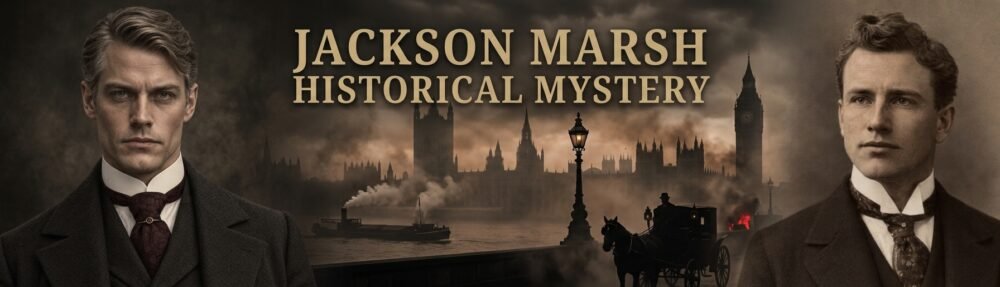
It’s been two weeks now since I published Journeyman Joe, and you might think I’ve been idle, but I haven’t. The need to write remains as strong as ever, and I have been writing every day as usual. Except it’s not been at my usual pace because I am writing something in a different era. Where Deviant Desire started in the Autumn of Terror in 1888, and the Delamere Dilemma ended in June 1894, what I am writing takes place ten years later, in 1904.
However, for those who wrote and commented and didn’t want to say farewell to the Delamere boys, I can tell you that, if this new project works, you will meet some of them again before long. Here, without giving away too much, is what I have started with.
The year: 1904 The place: Bedford Place, Bloomsbury, London The name of the business: Merrit Brothers. Confidential Investigations. Semper Veritas
This may sound like a continuation, but much has changed. Not only in London and the wider world, but also in the lives of the protagonists, Jack and Will Merrit.
I don’t want to give too much away, mainly because I have only written the first quarter of the first draft of a new and uncertain idea, but a new century brings new technology, new cases and new characters. While some of the original characters remain, some are elsewhere. I hope the underlying themes of male friendship, bromance and romance remain, but on top of them will be mysteries that the reader can consider and perhaps solve along with the detectives as each story progresses.
We are in the Edwardian period. There are the first motorcars on the road, some people have telephones, the Unionist (Conservative) Party are in power, the Suffragette movement is rising, and cinema is in the early days of popularity, though still young, and progress progresses at a fast pace.
These changes, and writing outside of the period I have been in for the last ten years, require me to research much that is new to me, and when writing, to stop, think and check the authenticity of everything from transport to costume. I must also consider what has happened to characters in the ten years since we left them celebrating at Delamere House, and this has given me hours of fun. Who is still with whom? What’s happened to X? Where is Y? Who might have died, moved abroad, moved on, and who remains of the cast from 10 years ago? This is why it is taking me a long time to get started. I don’t mean plotting a mystery; I have one set out already, but the characters I developed up to a certain point now have a missing 10-year gap for me to understand, so I am often pausing to consider not just physical appearance, but also their history, and that takes time. Actually, the physical appearance is often the easiest thing to invent, and I have been using some of today’s technology to help me picture them.
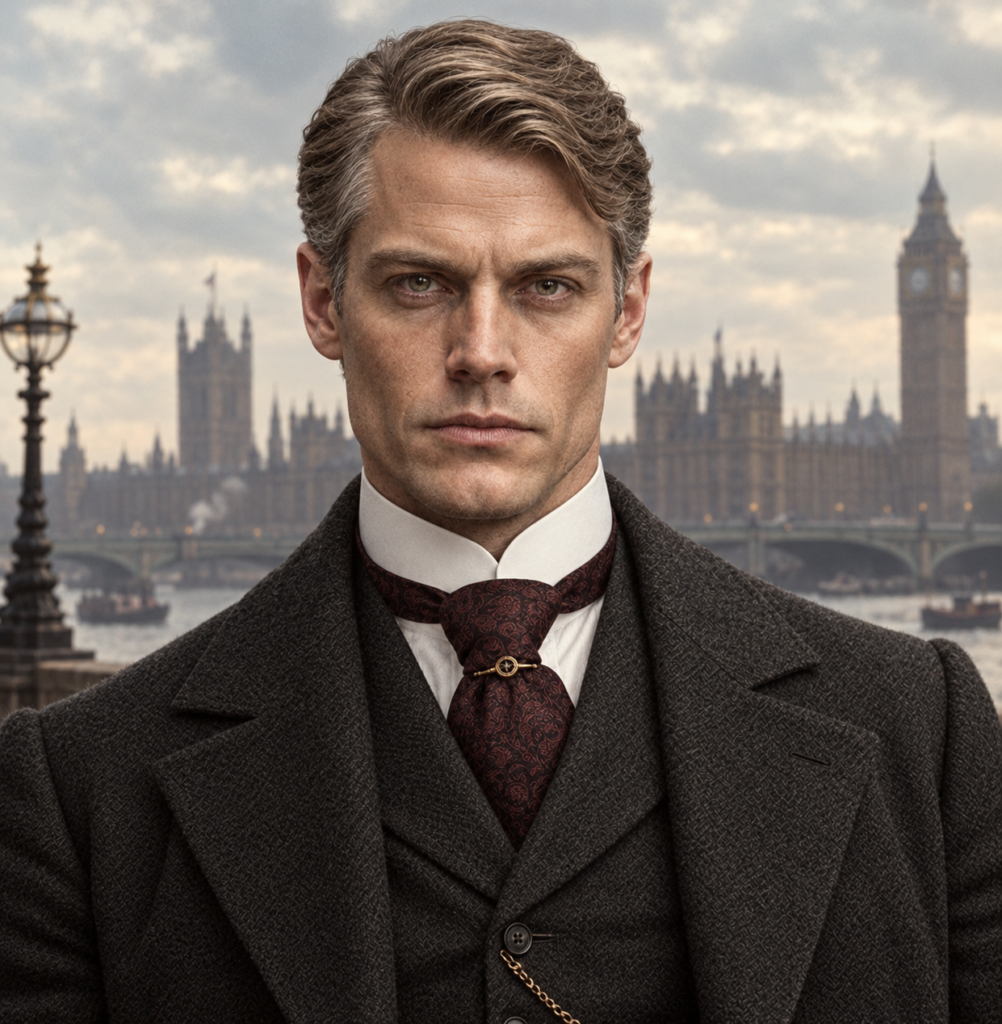
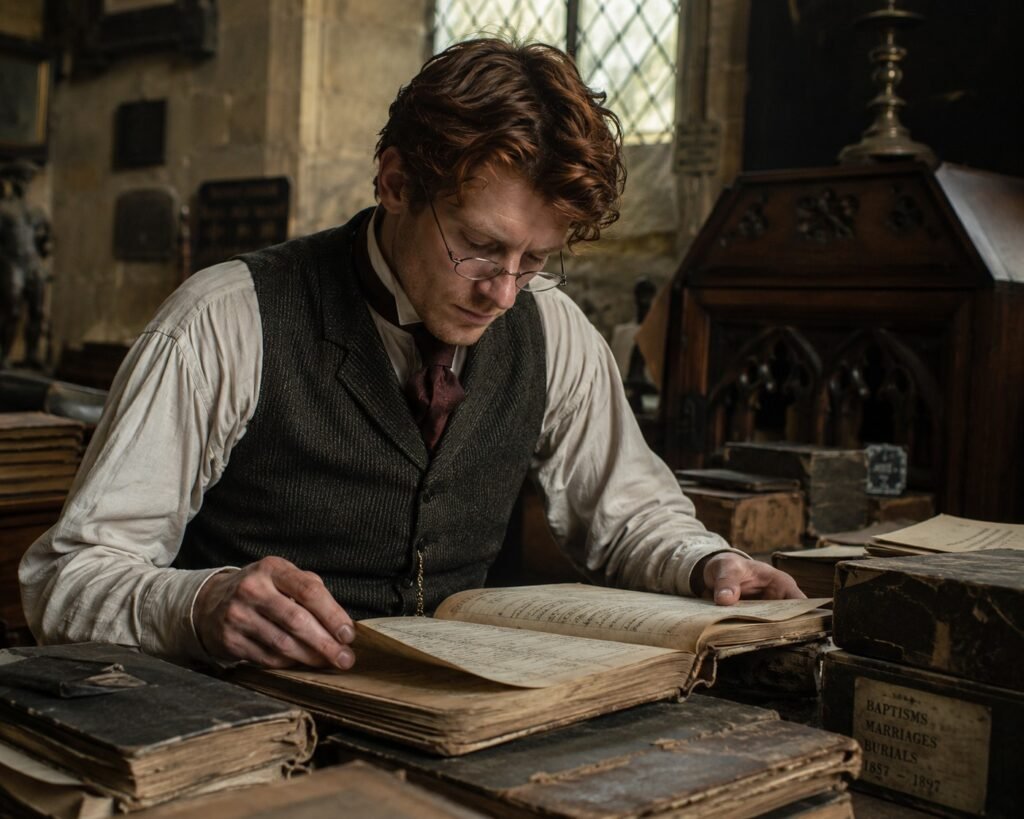
This, for example, is Jack Merrit in 1904. Now aged 37, starting to go grey, but otherwise still fit and handsome and not (as is popular with so many writers of detective fiction) a hard-bitten, bitter and burdened drunkard, but one with more experience, a few more scars and a lot more stories. But still the same heart underneath.
You will have questions: Is this character still in the stories? What has happened to this person? Are this couple still together? Has this one found love yet? How did the Oscar Wilde case affect them as gay men unable to exist as themselves? And, I hope, many more. I shan’t tell you, because I don’t know all the answers yet, but I can tell you that at the core of this first story in what I hope will be another successful series are four of the Delamere Files main characters, with others waiting in the wings to make guest appearances as we go along. Who these four are, though, is a question to be answered later. (Jack and Will Merrit, obviously, but as for the other two…?) So, folks, that’s where I am right now, and I’ll update you as I go. The chances are, this new book won’t be out until after Christmas, which gives you plenty of time to catch up.
If you’ve not picked up on the news, I released Journeyman Joe last week. This is a standalone romance that’s more about the people of the story than the mystery, which comes second to the characters and location. Rather than an action/adventure style mystery based in London, it’s a slower and more descriptive journey through a season in a Kent village. There are, of course, quirky characters, a handsome lead, some class distinctions, and some humour, but I hope it has some literary merit in its writing. Having said that, I’m not the sort to explore and understand the ‘human condition’ (whatever that is), or to raise great moral themes intended for discussion at book groups. Just a simple storyteller telling a simple story. You’ll have to make up your own mind.
Here’s the blurb and a universal link to Journeyman Joe:
Spring 1895.As London is gripped by the scandalous trials of Oscar Wilde, a blacksmith’s apprentice in a parochial Kent village is fighting a much quieter, lonelier battle.Joe Webster is desperate to escape the suffocating expectations of his family and his village. The only way out is to free himself of his indenture, which he can only do by becoming a journeyman. To do that, he must forge a new casket for the church, include a secret compartment, and swear an oath of absolute silence.
Joe is lost for inspiration until the archdeacon’s office sends the handsome and erudite historian, Harvey Cade, to inspect the parish records. As Harvey investigates a historical mystery, Joe realises what he needs to succeed: The forbidden love Harvey offers.
But navigating a double life under the watchful eyes of the village is a dangerous game. In the shadow of Oscar Wilde’s ruin, a single slip could cost them everything. When the casket’s secret threatens to publicly expose them both, Joe must choose: Protect the truth he was sworn to hide, or protect the man he loves. Kindle, KU & paperback
What’s Next? As usual with me, I am already onto what to write next, and I have two ideas, both returning us to the Clearwater world.
The first would be another set of Clearwater Tales, as requested in my Facebook group the other day. I’ve asked members of the group to suggest who they might like to see appear telling short stories, and I am building a list. No promises! The other idea, and this has only just started bubbling, is to start another series with the series title of the Merrit Brothers Mysteries, or similar. This would be set 10 years ahead of the last Jack Merrit story, starting in 1904, but it’s very early days yet, and I am still waiting for that surge of barely controllable inspiration to land on the desk, so we will see.
Meanwhile… I have a few promos this month, and two starting later in the month, which I will announce and also put into next month’s newsletter when there will be more talk about my next project. There may even be a free giveaway; I am still working on that. You can subscribe to the newsletter here.
If you’re currently looking for detective stories, though, you can check out the 34 titles in this collection of varied detective stories.
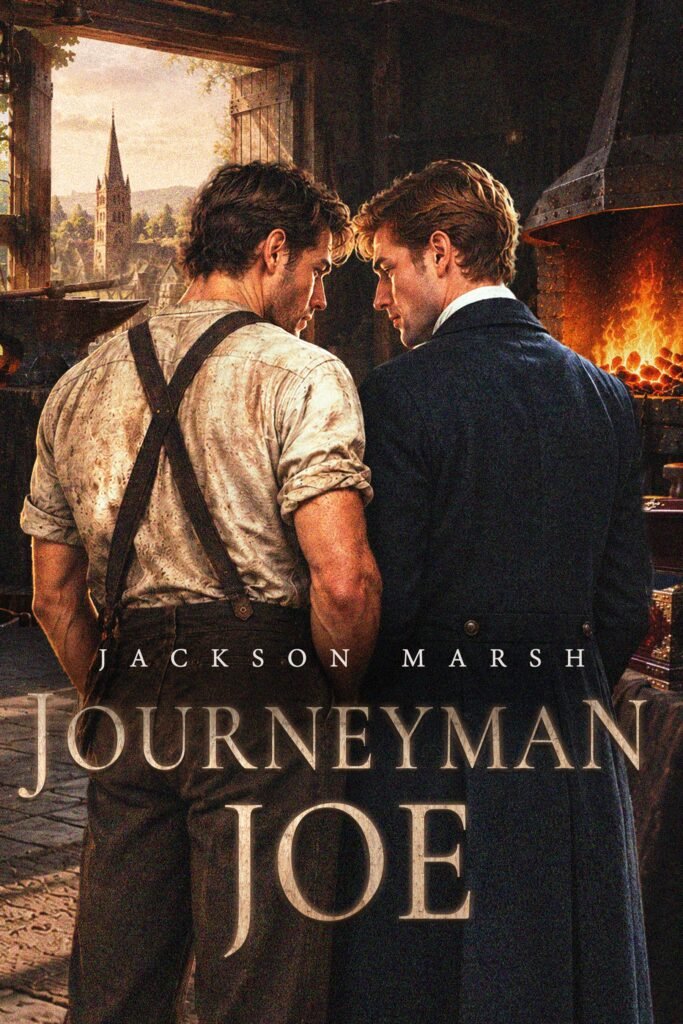
The news this week is that I am on my last read-through of ‘Journeyman Joe.’ I hope to have this book published for you within the next two weeks. To whet your appetite, here is the blurb and a moving cover I had a machine make for me. (Click play.) This isn’t based on the actual cover (we are still tweaking that), but it reflects a scene from the book.
Spring 1895.
As London is gripped by the scandalous trials of Oscar Wilde, a blacksmith’s apprentice in a parochial Kent village is fighting a much quieter, lonelier battle.
Joe Webster is desperate to escape the suffocating expectations of his family and his village. The only way out is to free himself of his indenture, which he can only do by becoming a journeyman. To do that, he must forge a new casket for the church, include a secret compartment, and swear an oath of absolute silence.
Joe is lost for inspiration until the archdeacon’s office sends the handsome and erudite historian, Harvey Cade, to inspect the parish records. As Harvey investigates a historical mystery, Joe realises what he needs to succeed: The forbidden love Harvey offers.
But navigating a double life under the watchful eyes of the village is a dangerous game. In the shadow of Oscar Wilde’s ruin, a single slip could cost them everything.
When the casket’s secret threatens to publicly expose them both, Joe must choose: Protect the truth he was sworn to hide, or protect the man he loves.
The monthly newsletter is out today with a featured book, some more news, and a couple of promo lists of detective and mystery novels on offer.
If you want to keep up to date with what’s going on in the world of Jackson Marsh, keep an eye on this site, subscribe to the newsletter, and keep watch on my Facebook page: https://www.facebook.com/jacksonmarshauthor
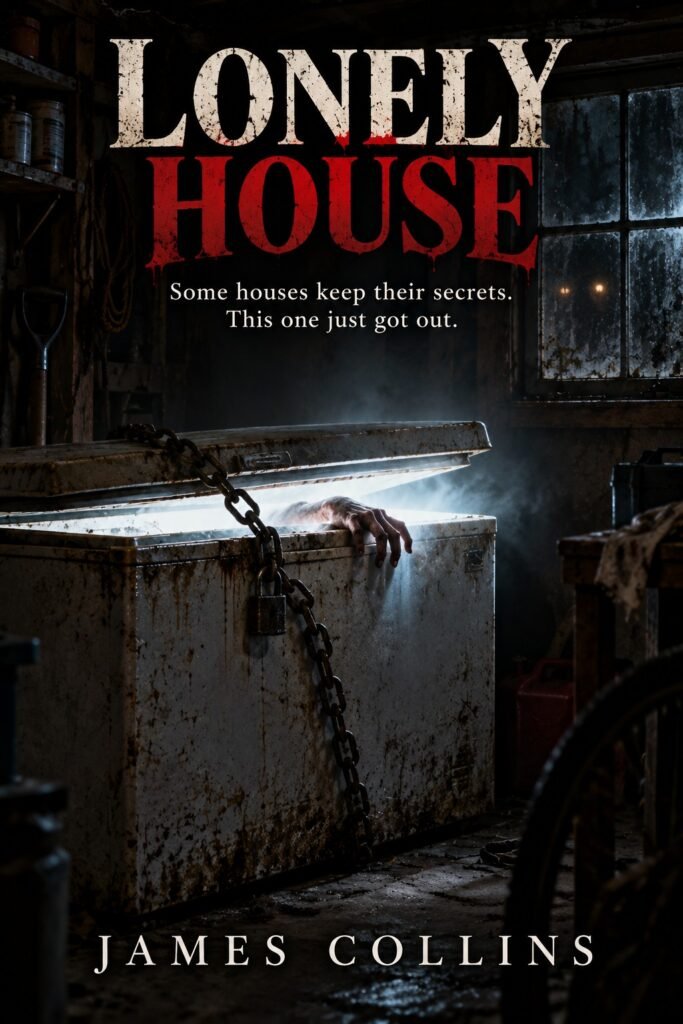
Something different today. I have been working on a rerelease of a novel I wrote when I was starting out (2015). Actually, I wrote my first ‘novel’ when I was 16 or 17, spending evenings at the desk in my bedroom inventing a story that I wanted to happen to me, writing longhand, and producing absolute drivel. I hope I’ve improved since then, and I certainly didn’t write ‘Lonely House’ wanting the events depicted to happen to me.
This story came about when I was writing for a small film company that wanted to produce a low-budget film. Low budget, in this case, was around £20,000 for the entire budget. They wanted one location, a small cast, and lots of horror. The cast of this novel numbers six, and there is, apart from flashbacks, only one location. It’s a classic ‘cabin in the woods’ scenario: a single house surrounded by a forest, and miles from anywhere. Yup. A classic cliché on which such horror films are built. However, there had to be something different about it, and so I came up with my two main characters.
Two young drifters, bound by a strange friendship and a terrible secret, with one being a criminal and the other an easily led younger chap who everyone thinks is ‘special’ or ‘slow.’ An accident in the lonely house leads to the unravelling of the horror, which only gets worse when the twists start and the past is revealed. Today, I wanted to point you towards Lonely House, which you can get on Amazon (KU, paperback, Kindle). Follow this link if you dare: https://mybook.to/LonelyHouse
How much horror can one friendship take?
Drover and Pete are two hopeful drifters looking for a better life. Desperate for food, they break into an isolated house deep in a forest. There, they accidentally shoot an old man just as the rest of his family arrive for a birthday gathering.
Under intense suspicion from the family, the boys attempt to cover up the accident. But they are not the only ones keeping a murderous secret. Mistrust and deception unearth a primaeval ritual as the lies give way to a terrifying truth.
With time running out and a deadly force closing in, Drover and Pete’s survival rests on the strength of their friendship, but they must face some horrific choices in order to stay alive.
I should warn you, though, that I am not one for peppering my blurbs and info with trigger warnings. The fact that you are in the horror section, reading a blurb about a horror novel, should be enough to tell you you’re in for some disturbing descriptions. You’re also in for a book that is written in the style of a film treatment, though much fleshed out and, after a recent edit, I hope, better than the original. It is not my usual Jackson Marsh style, because I wrote it before Jackson was born; it’s set in the present day, and… Well, you will see. It is still me, though. As for the original film idea… In the end, the production company went for another of my stories, The Judas Inheritance, which is set on the island where I live. The production went ahead, and they spent their 20k on getting everyone here, filming, falling out, and putting together something that resembled my story in no way whatsoever – but that’s another story for another day.
Monthly Newsletter
The monthly newsletter with other news and book promotions will be out next Saturday, so make sure you have signed up for it. You can do that at the top of this page.
I have just finished the draft of my new novel, which has settled itself on the title ‘Journeyman Joe’, and I must now work on the blurb. This is often more difficult for a writer to achieve than a decent story, and gives many of us a headache to end them all.
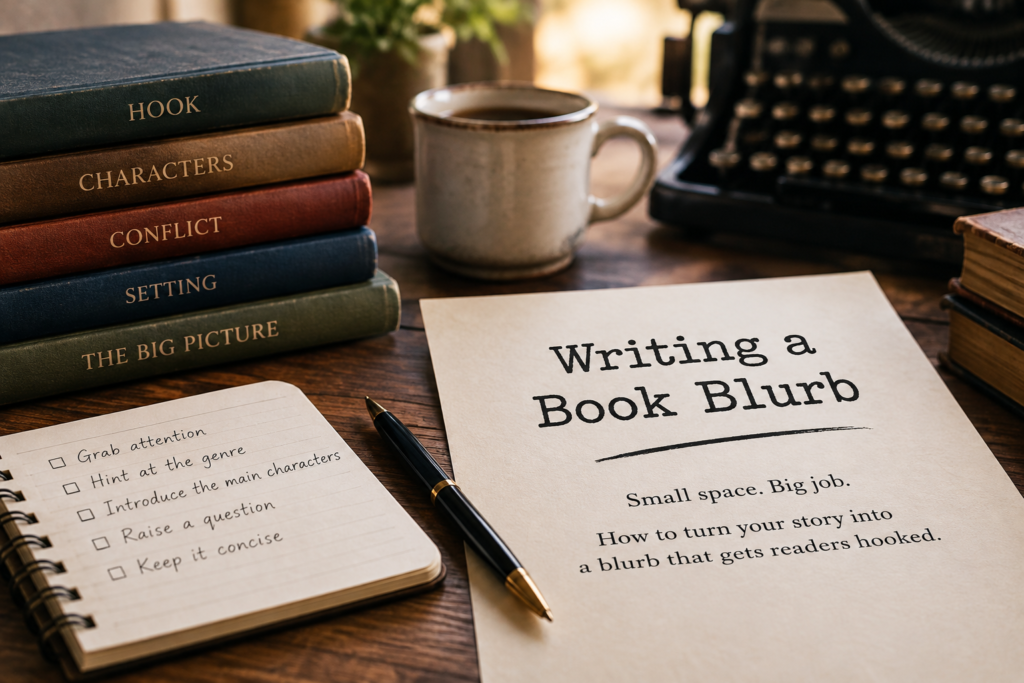
The blurb is that text the potential reader sees after looking at the cover. It’s on the back cover for when people pick up the print book, and it’s on the book’s Amazon/other store page if it’s published that way. It’s a vital incentive for any interested party to delve further, and usually they will go next to the first page, so that needs to be good too. But that’s another story.
So, how do you go about putting together a blurb? It will be different for everyone, but here’s how I do it, and it’s not always in the same way.
What a blurb is not.
Unknown to some who use all of Amazon’s character spaces, a blurb is not a book’s synopsis. They are even more difficult to write. A blurb is also not a detailed summary of the plot. It’s not a review of the book either, nor is it a lengthy report to be turned in to the teacher first thing on Monday morning.
So, what is a book blurb?
It is a short and persuasive sales pitch to potential buyers. The aim of the blurb is to arouse curiosity and lure the would-be reader towards the cash register. It is made up of four components, or at least it should be. I’ve seen some run on for a page or more. Therefore, it’s important to keep the word count below 250, maximum.
What are the four components of a blurb?
The pedant in me wants to say, letters, words, punctuation… and it is very important to get them right, but you can’t do that until you have made clear:
* The Hook. The tagline. The impactful few words that stop people scrolling. * The Main Character. The protagonist, or plural if you have two. No more, though. Two is complicated enough in 250 words. * The Conflict. There is no drama without conflict, so you need to highlight any change in status quo (not the rock band), and point up what’s at risk, and what’s going to get your potential reader saying, ‘Oh my,’ and reading more. * The Stakes. The tease. The ‘What if the main character fails?’
What should not be in there?
No spoilers, no plot twists, no backstory because no-one’s interested in that at this point. Nothing fancy to show off your grasp of language, and no subplots, brilliant though they may be.
Right then. How do you put together a blurb?
Well, first, you decide when to write it. Sometimes, I’ve written a blurb before I start on the book. This is a way of keeping yourself in check. You can refer to it as you go, to ensure you keep the four main elements of character, plot, crisis and resolution. Sometimes, I write it as I am writing the book itself. More usually for me, I write it after I have finished the draft and before I send it to my proofreader (always a good idea to have your blurb proofed). During whichever process, the blurb changes as you develop the story, but if you are telling the story you planned, the main elements should always be foremost in your mind. Then, once you’ve got your loins girded and your baldrick slung, you can take on the blurb proper.
Write four paragraphs.
I write out the plot points I want to get across in the blurb, and try to keep the limit at four. I expand those into a load of gobbledegook, but at least everything I want to say is in there. For example:
ONE. The, as yet, off the top of my head blurb for ‘Journeyman Joe’ starts like this: Spring 1895. In the rural Kent village of Runton, Joe Webster is nearing the end of his blacksmith’s apprenticeship when the churchwarden commissions him to build a traditional casket for the church records. However, it must contain a secret compartment with access known only to them. Needs work. A lot. But we’ve met Joe; we know where and when and what, and we have the seemingly innocent yet mysterious task. Once worked, this opening should tighten the hook: why a mysterious task? However, there’s no potential conflict. That comes next.
TWO. Then, because this is an MM romance first, and a mystery second, I need to get in the ‘impact’ character; the one who is to stir up Joe’s life, cause the drama (internal and external), while innocently going about his business. This chap’s called Harvey Cade, and it’s important to mention the name only if you are going to use it again in the blurb. Don’t use it once and then call him by his job title, ‘The archdeacon’s investigator’ (or whatever). Consistency is the key, but you can also get in what the character is if necessary. When the archdeacon’s investigator, Harvey Cade, arrives in the village… Job done. Better done by adding a stop! You do this by breaking the rules of British public-school grammar: Never start a sentence with a conjunction. But when the archdeacon’s investigator… We have already seen a more acceptable pause in our reading in the first paragraph with However… (Don’t actually write that ellipsis; it will look tacky.)
THREE. Next comes the conflict, and in this case, it’s more to do with forging an illegal relationship than it is to do with the mysterious box. My current gobbledygook looks like this: There is much gossip about Joe turning down a girl everyone thought he would marry, and the involvement of Mr Cade and the secret activity of the parish council. Only Joe can unlock the casket and reveal the truth – but he also has to decide his future. Bare bones need resetting and, in places, fleshed out, but that’s the gist, and it’s more or less all we need for now.
FOUR. The stakes, the tease, the… rest of it. Vital to the story is village gossip, because the stakes here are that two men heading towards same-sex love (and nookie) were completely illegal, not to say shameful, in Britain in 1895. The stakes are obvious, but might need some detail, and as my story takes place at the time of the Oscar Wilde trials, there’s my comparison, because we all know what happened to him. At least, if you don’t, you should go and read up on it.
I also need to leave behind a feeling of what happens next, and how will it all end? You start with a hook, and, similarly, end with one. Or end by adding bait. Remember, your game here is to lure $4.49 from the pockets of the discerning potential reader.
With four paragraphs of probably too detailed nonsense under your baldrick, you can then start editing. This, for me, is the fun part.
But… (I did that on purpose) You must remember to use impact words. Cut down or add in, as long as every word counts, and you have your impactful words. Joe Webster is keen to pass his apprenticeship. No. Joe Webster must, has no option to, or is desperate to pass, succeed in, get through (no, survive), etc. You see where I am going? A book blurb should be impactful, yet not made up of smash, bang, wallop, take that, you cad! to the extent we cringe.
It should be short. In fact, start by thinking about those taglines you see with films. My favourite is for Jaws 2: “Just when you thought it was safe to go back in the water.” Or, more appropriately for Journeyman Joe, The Shawshank Redemption: “Fear can hold you prisoner. Hope can set you free.”
I sometimes use such a tagline atop the blurb. Other times, I use a quote from the book itself. It’s the part when you read it back to yourself that makes you go, ‘Ah ha! That’s what this is about.’
For an example, see Guardians of the Poor, the first in my Larkspur Mysteries. There, I quote the mentor character from the story with: “The greatest gift one man may give another is his trust.”
When you’re editing, chop out anything you think unnecessary to the potential buyer, change words to be more impactful, and if you’re having trouble, just write exactly what you want to say, and then cut it down to what you need to say. Yes, it is that easy (not), and no, you will never be happy with it. But… (I’ve done it again), the joy of self-publishing is that you can always change it later. Maybe not on the cover, but certainly on the Amazon or wherever page.
Should I use AI to write my blurb?
Only if you want it to sound like every other AI-produced blurb, and get looks down the noses of writers with talent and persistence enough not to resort to asking a computer to do their work. However, where AI is acceptably useful is in providing ideas. To get a decent result, you need to outline everything you want your blurb to say before you make the request, else all those bot bytes will vomit back all kinds of patronising rubbish. Mind you, you’ve already just done the hard part and summarised your work enough for a computer to understand, so you may as well finish the job yourself. You could ask it to make suggestions of what would be more impactful, but don’t then just steal the text. Take a few impact words, perhaps, but make the sentences your own. If you only copy and paste, you are copying legions of non-writers who churn out computer-generated garbage and call themselves an author. (Do not get me started.)
Instead, I will stop there, and hope this piece will be of use to someone somewhere. For more of my thoughts on how to write a novel, blurb, and the rest, see the list of previous articles under the Author Tips link in the top menu.
It’s been a while, but here I am with a completed first draft of a new novel. Currently, it has the working title of ‘The Journeyman ’ and runs to 135,000 words.
I also have a working logline:
A blacksmith’s apprentice falls in love with another man during the trials of Oscar Wilde while forging a mysterious lockbox.
That is the basic hook, which gives nothing away, but it’s also rather clumsy, and sounds like the apprentice is doing his work in the Central Criminal Court while the trials are taking place. In fact, he lives and works in a small, rural village in Kent, some 60 miles away, and is unaware of the trials and scandal taking place in London. So, I’m still working on that while I continue to work on the manuscript.
Oscar Wilde was in court three times between April 3rd and May 25th, 1895, but the scandal began earlier that year. On February 28th, 1895, the Marquess of Queensberry left an insulting card at Wilde’s club addressed to “Oscar Wilde, posing as a sodomite.” That led to Wilde suing for criminal libel at the Old Bailey. However, facing devastating cross-examination by Edward Carson regarding his writings and relationships with young men, Wilde withdrew the suit, and Queensberry was acquitted. Immediately after, authorities issued a warrant for Wilde’s arrest. The situation for Wilde worsened from then on.
Joe Webster, a 20-year-old blacksmith’s apprentice, is approaching the end of his indenture and hoping to become a Journeyman so he can go ‘tramping’ to find a new job and a better life.
Two things cause upset in his world; a commission to make an unusual iron chest, and a man called Harvey Cade.
And then, there is a death and an inquest…
Wilde is the far-away background to the story, and not what the story is about. I chose the spring of 1895 because it follows on in the timeline from the end of the Delamere Files, although this story has nothing to do with the London characters or stories of the Clearwater, Larkspur, and Delamere mysteries, and is not like those stories at all. There is a mystery, but not one of my usual ‘improbable but possible’ mysteries, and the mystery is not at the heart of ‘The Journeyman.’ The heart of it is about two men falling in love, and a lot of it is to do with village life.
As they say, all will be revealed in time.
For now, I just wanted to keep you informed and let you know I’ve not dropped off the end of the world, and am beavering away in the background. I have some other work to catch up on this week, but after that, I shall be back to the draft and the editing work, improving the MS and thinking of covers and layout. If I can get ahead, I should have this release ready for you sometime in October, so keep an eye on my blog here and on my social media pages. You can find the links in the right-hand sidebar. I will keep you informed about the journey of Journeyman Joe (another possible title).
Promos
Meanwhile, the publicity work continues, and that’s the side of things I’m not very good at. Too busy writing to think about it all, and with no money to pay even a reputable company to do it for me. The best I can do for now is rely on these free promo-shares from BookFunnel, and here’s one that you might like to explore.
LGBTQ+ Books
Genres: Romance / LGBT. The books in this promo have to be romance, but with no erotica, and then it says there must be some heat – so, I assume, they will be low-level-heat romances. I have my three series starters in there, because they are romance/mystery with a little heat.
The new novel is taking shape. I am spending my days writing a story from start to finish with no thought yet for chapter length or book length, and I’m enjoying the freedom and process immensely. I’m also writing a great deal of text that isn’t for the book, but for me, and that is all part of the process.
The first draft is where I tell myself the story. I do this as best as I can without knowing the characters, but as I go through, I discover more about them, and often, more about them than I need. I already have a few pages of discarded description in my ‘Cut’ folder, and far too much other ‘telling’ description in other places. When the first draft is done, and I read back over it, I will take out the excess, leaving in place only what is needed, and improving it if I feel it needs improving. I don’t throw away the cuts, though, because they might be useful somewhere else.
I think many writers become precious about their work, and leave long and unnecessary passages in their books because they don’t want to let them go. ‘I wrote that, it’s lovely, and I like it.’ Fine, but does the story need it? In a lot of cases, no. But in some cases, maybe another story will need it, or maybe you will need part of it for something later. Either way, it’s a good idea to be ruthless, but keep your cuts, because you were obviously trying to say something, so you need to ask yourself why.
For example, in my ‘Cut’ folder for the new book, I have 1,000 words about the impact character, Harvey Cade. He is the archdeacon’s agent, sent from Canterbury to examine the parish registers of a Kent village in what was a regular yearly or five-yearly audit (for want of a better word). That’s his job, but who is he?
I had him riding his bicycle from Canterbury to the village, and while he was doing so, I wittered on about his past, schooling and so on, in a very obvious ‘Tell’ scene.
I am referring to the old saying that you should ‘show, not tell’ in your narrative, though I don’t necessarily agree with that all the way to the finish line. I mean, ‘It was the best of times, it was the worst of times’ is a famous opening line, and it’s simply telling us information. (A Tale of Two Cities.) Sometimes, this works, and it’s perfectly acceptable, as it was in Dickens ’ case. So why not open with a similar line, like this one from the cut chapter.
Harvey Cade had learnt to be two people, and whichever one he was at any one time was all to do with whose company he was keeping.
Yeah, okay, maybe a little mysterious, but this character trait is something that would be easy to show rather than tell. In fact, Harvey explains that he was brought up in a small village, but went to a public school where he was taught to lose his country accent and behave like a gent. That is all I need to tell the reader. Rather than write, ‘This left him able to talk in two voices and play two characters’, it’s much more rewarding to show him talking one way with a villager and another way with the archdeacon. That shows the reader that he has two different ways of behaving.
The second cut sentence was: This wasn’t a condition brought about by trickery or the desire to mislead, because he was at heart a very un-misleading person, and the original him was still present beneath whatever façade a situation required.
Yeah, yeah, whittering blurb that I should keep to myself. I can show him being a very un-misleading person later in the story. Right now, he’s cycling along a Roman road on his way to a new assignment. Why does the narrator need to tell the reader everything about him in his first scene? Save it for later and drip it out through the story, and if you can, show him being un-misleading through his actions or dialogue.
I’m not going to bleat on about it. I just wanted to get this thought out of my head and onto a page before getting back to chapter 30 of the new book ‘Untitled’, but I am playing around with the idea of ‘Journeyman Joe’, or ‘Apprentice Webster’, because many other suitable titles are already clichés. But titles are another story.
Newsletter The September newsletter and all its promo ideas will be out on the 5th, so make sure you have signed up by then. Sign up here.
Here’s a question for you. Should a character from your novel appear on the cover of your book?
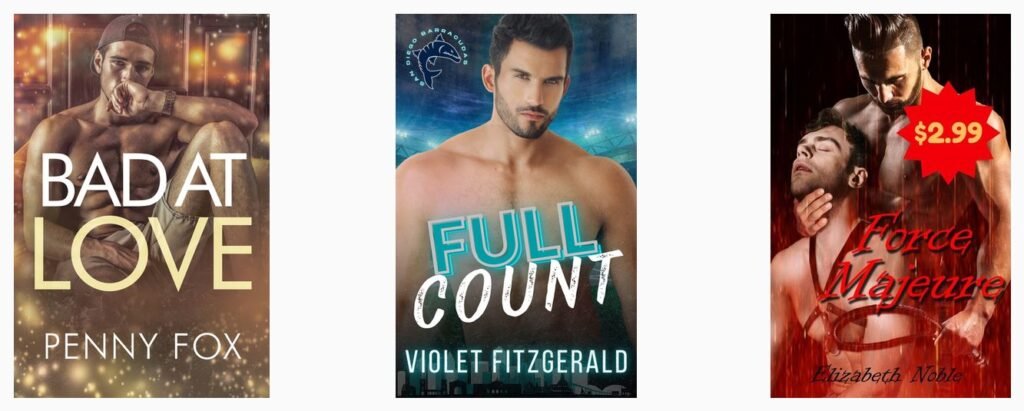
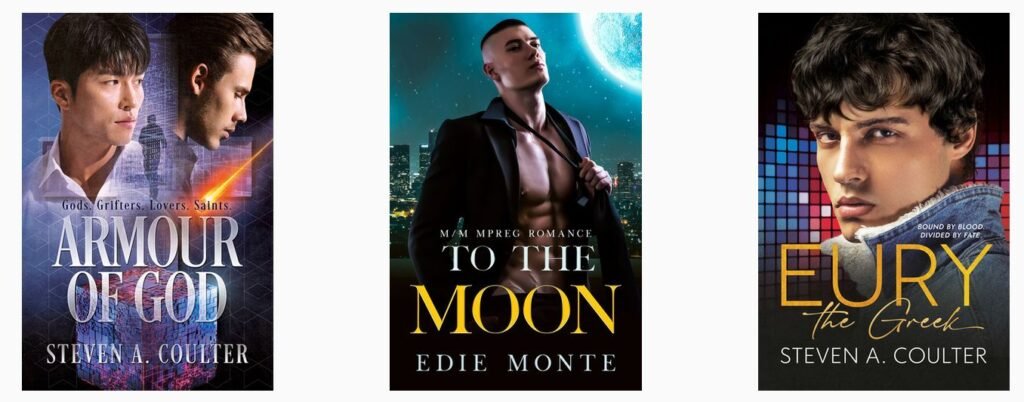
A lot of MM Romance books show topless men on the cover. So do a lot of straight romance books, come to that. When I see a guy on a cover, he’s invariably a hunk, put there to attract the eye and draw it towards the blurb, or sometimes, just to draw the viewer to the ‘buy now’ link. The chap can be dressed as a hockey player (yawn), or whatever the subject of the story happens to be, or it might be a couple of guys, but it’s usually an image to represent the main character(s) of the story. Fine. We all do it. I’ve done it a lot, and if they say a face on the cover is what you need to draw a reader to a purchase, then it’s done me well.
But I was wondering, ‘Does seeing the author’s idea of the main character spoil the reader’s enjoyment?’ Does it take away something from their imagination? You are showing them what your main man looks like, and shouldn’t that be up to the writing, and up to the reader to form their own picture from your story?
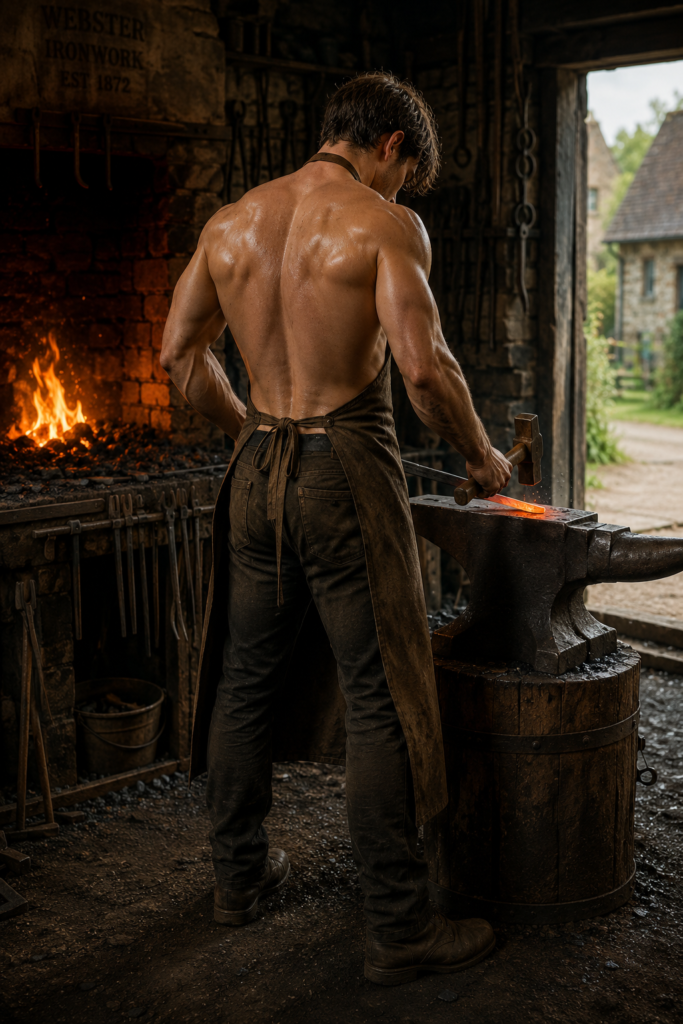
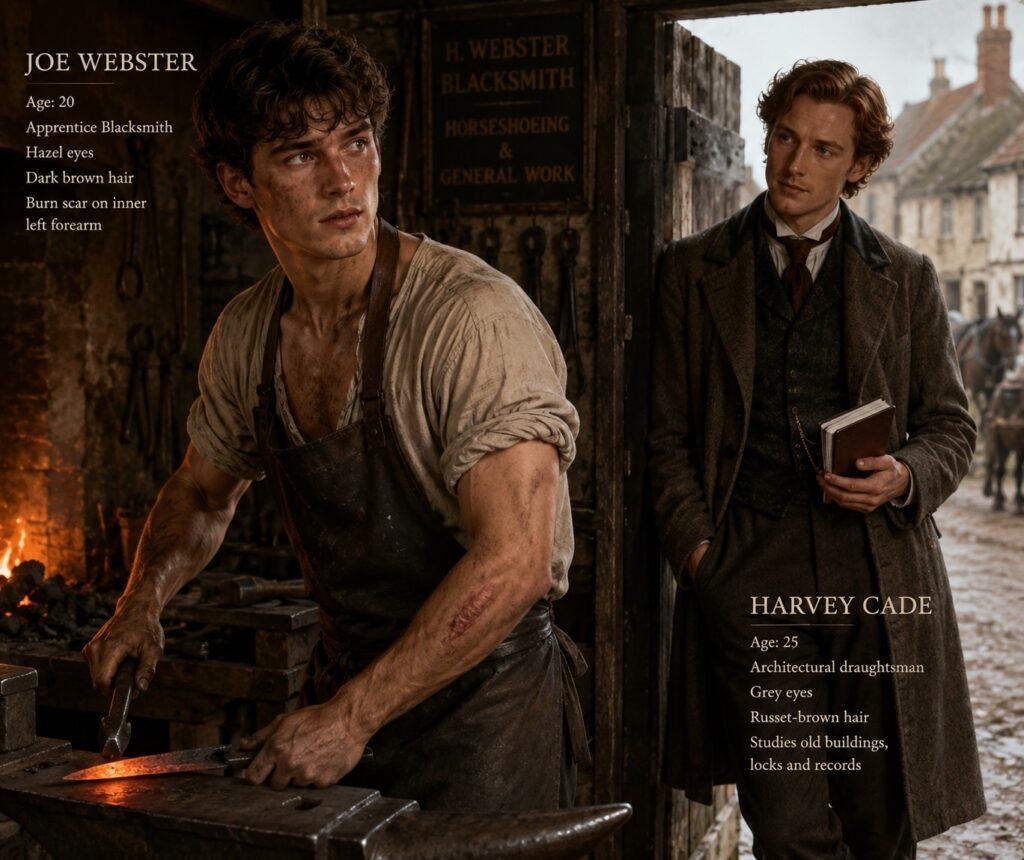
Let me introduce you to someone else’s view of my main character, Joe Webster, a 20-year-old blacksmith’s apprentice from a small Kent village, in 1895. When I say someone else’s view, I am referring to the free AI, ChatGPT. Before I go further, I want to make it perfectly clear that I only use AI search engines for research, as I’ve stated before. In this case, I used it out of interest to see how my description of a character was interpreted by the AI thing. This image will not appear in or on the books, and this may not be your interpretation of the character(s) when you come to read the book. It’s not exactly my interpretation, either, because all I did was put in some character details such as age, ambition, skills, manner, attitude, etc, and not physical attributes. Here’s what it came up with for my two leads, the main character, Joe Webster, and the impact character, Harvey Cade.
To be fair, seeing this interpretation did give me some inspiration for other physical details, such as pose, attitude and costume, but later, after playing around with other characters and their images, I soon realised that AI is limited, and very often the same character interpretation can have exactly the same attitude about them and be in the same pose. They often have the same facial features too, but changed slightly; so the AI thing is pretty limited in that respect.
But the point of this was to satisfy my curiosity and see my characters ‘brought to life’ in images. It was interesting and even fun, and has been useful, but only to make me question if he really looked like that in my imagination. Should I change my descriptions to fit the image? (No.) Should I give the AI more info and see what happens? (Very similar image, same pose, nothing much changed.) And, should I use this for the cover? (No, because that would take work away from Adnjela, and she is a trained designer.)
I’ve wandered from the point a little, but the questions remain. Does showing your MC on the cover hamper the reader’s imagination or enhance it? Has this ‘topless hunk on the cover’ been overdone? Does it still work for you?
There are plenty of questions on this subject, and I’m only thinking aloud, but while I am doing it, I must confess to finding naughty pleasure in seeing the dreaded AI interpret my descriptions.
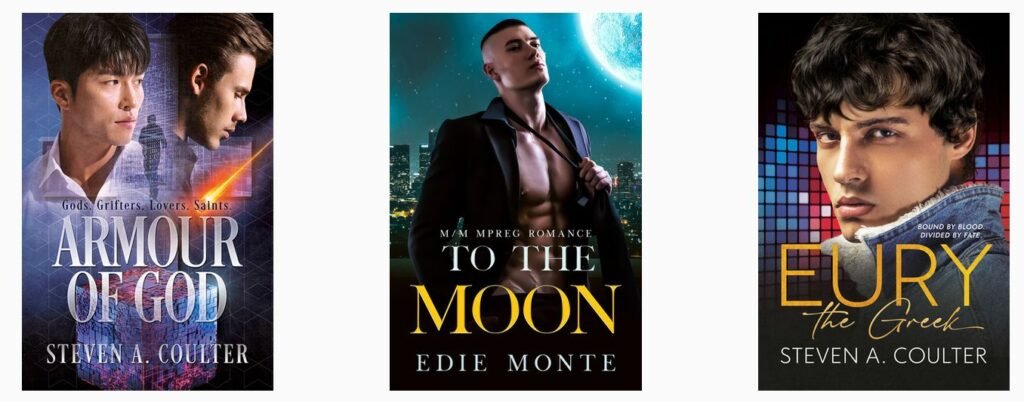
This is appropriate. A special promo feature in gay novels that have no AI input at all!
Human Element – AI-Free MM Romance Books
Although AI can be helpful as an advanced search engine for research (with all results double-checked and verified elsewhere), most of us proper authors are totally against it producing texts.
This collection of 33 + MM romance titles has no AI-written rubbish!
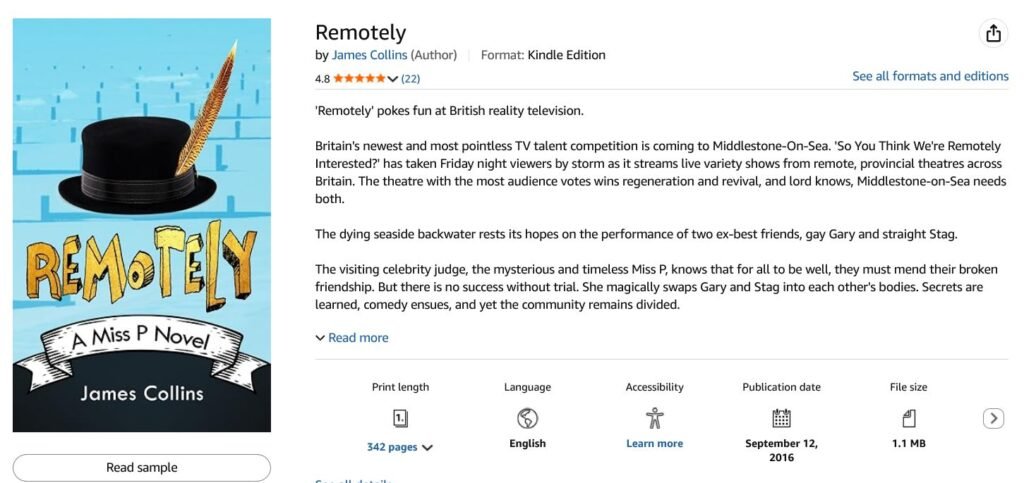
This week, I have something entirely different for you. I am so absorbed in the writing of ‘Lockbox’ (working title), that I have little time for anything else, so I thought I would talk about Miss P. Who? Miss P is the central character, the protagonist, in ‘Remotely’, a comedy, gay/straight body-swap novel I wrote ten years ago. This novel pokes fun at TV reality talent shows, while telling of the mending of a friendship between an out gay guy and a very much out straight guy, both 18, and friends since childhood until something happened.
Miss P is a magical, timeless person of all ages who is sent by a higher power to right the wrong and put the friendship back on track in time for the finale of the hit TV show, ‘So You Think We’re Remotely Interested?’ You can read the blurb and find the book here: Remotely, James Collins, on Amazon Kindle, KU and paperback.
‘Unforgivable!’ This is the title of a second Miss P book I was working on but which I never finished. This one was to be set in the world of the West End musical and poked fun at certain mammoth composers of ‘coach party musicals’, the Disney take-over, and other London theatre matters. Another farce, it was to concern a struggling young musician vs the country’s most popular composer of musicals. (With a gay love story in there too, of course, and a house full of eccentric characters.) As I was writing it, I became sidetracked by writing some MM romance, and then some Victorian mystery series, so it never developed.
However, with nothing else to let you read or tell you right now, I thought I’d let you have the first (rather busy) chapter for free, unedited. It’s in a different style to my recent Jackson books, but might give you something to digest over breakfast. Here’s the link to the first chapter in PDF format, which you can read online or download and save.
Don’t forget, you can also read another Miss P story, the novella, ‘Honestly’, for free, right here: Honestly.
Have fun reading. I am now going back to ‘Lockbox’ and 1895. I’ll bring you more news on that very soon…
Human Element – AI-Free MM Romance Books
Although AI can be helpful as an advanced search engine for research (with all results double-checked and verified elsewhere), most of us proper authors are totally against it producing texts.