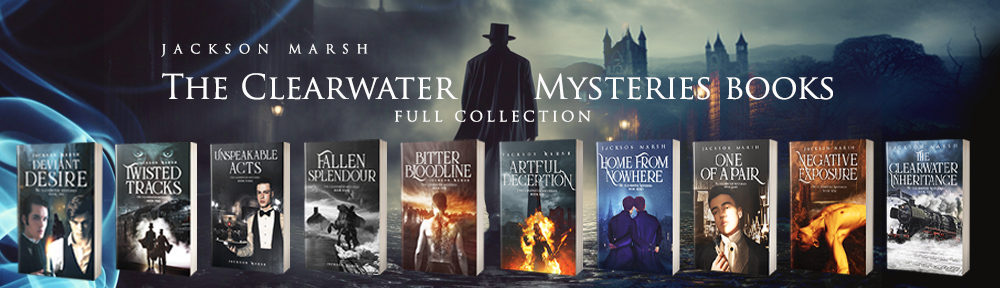
I Published a Book. What Do You Think?

It’s a sad fact that many first-time writers will say, ‘I finished writing my book last night,’ when what they mean is, they finished writing a first draft. I’ve seen it myself, when someone has sought me out, and asked me to look at their publication, proudly showing it off, cover and all, printed and bound, and in their hand, and they’ve asked for my opinion. I used to tell them what they wanted to hear, but now I say, ‘Do you want my honest opinion, or do you want me just to say, it’s lovely?’

Most of the time, when someone asks you what you think of their work, they are asking for approval. They don’t want you to say how you think it could be improved, because they think it’s already perfect.

This happened last year: I was sitting outside our local bar as I often do in the summer afternoons, and someone I vaguely know bounded up with the first copy of his book under his arm. Knowing I make a living out of writing, he asked me to tell him what I thought. Honestly? Yes, please. He was one of the genuine ones. He wanted me to pull it apart so he could take it back to the people he’d paid to publish it and get them to make changes, so I knew I could be direct. I didn’t read all of it, only had a glance through, and seeing it had been printed in a sans serif font was enough for me. But, based on what I saw, here is a list of some of the things to avoid, look out for, be wary of and do when self-publishing. As usual, these are my opinions, and other writers will have a different view.

What happens after you’ve written your first draft?

Answer: You write a second, and third, and fourth, and as many as it takes to make it perfect.

Never pay to have your book published

You don’t need to. There’s no guarantee the people you pay thousands to will keep their end of the bargain. It’s vanity publishing, and often, they only put out what you put in. If you present an unfinished manuscript, or one that needs editing, they might say they will edit, but often, they don’t. It comes out with typos and all. If someone other than you wants to publish your work, they should be paying you. It’s as simple as that.

There’s a draft in here

‘I finished writing my book!’ Translates as, ‘I’ve written a first draft, and it’s perfect. It says everything I want it to say. I’ve reread it twice and not had to change a thing…’

Alarm bells.

Nothing is ever finished the first time around. Or as Hemmingway said,

‘The first draft of anything is shit.’

Here’s my list of drafts:

1st       Don’t get it right, get it written. Bash it out, put the words down, tell yourself the story, make notes on the side as you go. Scribble reminders to include XYZ, number your files in order but give them POC titles. I.e., the Larkspur Legacy currently has 49 chapter files with file names such as:
20 Meanwhile, Silas at Larkspur, and
44 In house Dalston on way.
This makes it easier to nip back and make changes or check facts.

2nd      Read it through chapter file by chapter file. A POC, in my terminology, is a Point Of Chapter. Each chapter should do something otherwise it’s shoe leather, a term borrowed from screenwriting, where you write a scene just to fill in time. (You and the reader wander around aimlessly.) I’m not talking descriptions and atmosphere, they are essential, but someone having a conversation for the sake of it, or a scene that doesn’t advance plot or character, or in my case, mystery, that’s shoe leather.

Also, while in what I call draft two, the first readthrough, I cut out repetition. I have this thing where I get characters to tell each other or the reader their backstory or something they know, so that when I get to those parts in draft two, I can say ‘We know this.’ I make sure it’s been covered or mentioned, and then cut it out. It’s like dropping ‘remembrals’ along the path and then kicking them out of the way when you take the same route again.

Draft 2a. At this stage, I give what I have to my beta reader (husband) to read for story consistency. Does it make sense? Anything leap out as wrong? Any repetition? Anything that made you say, What the…? That kind of thing. It’s a structure read, if you like. I’m always pleased if I overhear him sniffing back tears, or laughing aloud, or calling me names when he gets a surprise, always so encouraging.

3rd       This is when, having gone from 100,000 words to 95,000 words of your draft, you know you need to cut another 5,000. Why? My story is perfect as it is. No, it’s probably not. We’re very good at defending our own work, some authors call their books their babies (eek!), but that’s not the relationship you should be having with them. You command them, not the other way around. So, “If in doubt, cut it out,” as our family doctor used to say.

Also, at this time, I perform an in-depth edit for grammar, punctuation, passive Vs active sentences, sentence length, word repetition… the technical side of the craft. To assist me, I use Pro Writing Aid, and Grammarly plug-ins, but ultimately, the style is up to you, so you can ignore their advice if you want. (I never use Microsoft’s grammar checker, and I’ve not explored their ‘editor’ yet, because I use those other tools.)

You may repeat the draft-three surgery as many times as you see fit, but let’s say you’re happy with your MS after draft three. What next?

4th       Draft four, of course. Some people say you should rewrite the entire thing from scratch, and yes, if you are a masochist, you can do that. If I’m not happy with a chapter or part of, I will take it out, discard the whole 4,000 words or whatever, and completely rewrite them. If I feel one of my novels needs completely rewriting, then I will probably throw the whole lot away and write something else. Clearly, the idea I’d had didn’t work, so why flog the proverbial?

Draft four can be a rewrite or a reread, but it’s usually the time when I put all files together and read the entire MS as one. While I am doing that, I check for typos.

TIP: Put the MS into one word doc, and as soon as you see a typo, run a search and find for that typo to ensure you haven’t done it again. Repeat this process before you send it to your proof reader, to cover anything you may have added in while editing.

Bonus TIP: I have a sheet of paper on which I wrote my most common typos. Some of them look like this: Wrote/write. Mr Lord/My Lord. Form/from. Sails/Silas. Desert/Dessert?

Time to let it go

By which I mean, let it go to a professional proof reader and/or editor if you work with an editor and we all should. If only we could afford it.

While you are paying to have the MS checked for typos, incontinences, spelling errors etc., there are other things to be doing. Hiring a professional artist to produce the perfect cover. Paying for illustrations or maps, if necessary. Working on the blurb and publicity releases. Starting the publicity ball rolling. Beginning the next novel…

Then, when the MS comes back, you need to read it again to approve the proofing, and that’s your last chance to make any changes. If you do, be careful not to add back in any other errors.

Then, it’s a case of having the MS laid out, uploading it to where you’re going to sell it, getting it publicised, and sitting back waiting for the money to come rolling in. It’s unlikely it will, so start the process again with a better story, and learn from any mistakes you made while writing book one.

Then, when you present your published book to people, you can do so knowing you have at least done your best to make it as perfect as perfect can be. Hopefully, the person you show it to won’t do what I did when that chap I was talking about showed me his ‘baby.’ Scream at the sans serif font, gasp at the overuse of exclamation marks, point out the various ways he’d spelt the same word, put double line breaks between paragraphs, and used “ ” instead of ‘ ’ (Apparently, double quotes for speech is American, and single is a British thing.)

But most importantly:

Don’t be put off by honest and constructive criticism, even when it feels like someone isn’t being positive. If all you want to hear is, ‘Darling, that was wonderful,’ then you should be working in the theatre.

Jackson Marsh

What is The Smoking Gun?

The Smoking Gun, Definition and history

According to the Miriam-Webster dictionary,

a ‘smoking gun’ is

Something that serves as conclusive evidence or proof (as of a crime or scientific theory). In legal terms, the smoking gun is the term is most often used to describe a piece of circumstantial evidence that will lead to a person’s conviction.

Cornell Law School.

Looking at other sources, we also discover that the term refers to the strongest piece of circumstantial evidence, as opposed to direct evidence, and the phrase, or one very like it, was coined by Sir Arthur Connan Doyle in the Sherlock Holmes story, The Adventure of Gloria Scott. In 1893, he used the words, smoking pistol, which was much more in keeping with his time and characters than ‘gun.’ The gun version seems to have come about in the 1970s, and may first have been used during the Watergate affair, because reports referred to one of Nixon’s tapes (June 23rd, 1972) as ‘the Smoking Gun’ tape, perhaps borrowing from Connan Doyle.

Examples of the Smoking Gun

Watch any of today’s action thriller films, and you will see examples of the smoking gun. The best ones are those which turn out to be something that’s been staring us in the face all this time, and when you realise, you say, ‘Oh, of course!’ At least, those are my favourite times, and I’m now trying to think of a classic one… The trouble is, they are also plot spoilers, so I can’t even give you an example from any of my books, in case you’ve not read them all. (And if not, why not? Lol.)

An example which is not a plot spoiler, might be: You walk into a room to find the last chocolate biscuit has been snaffled away, and your young child protesting his innocence… with chocolate all over his face. (That’s circumstantial evidence. ‘Real’ evidence would be him holding the last piece of the biscuit.)

How to use a Smoking Gun

I like to use the device as a twist, a revelation, or a key to unlock a mystery, but you have to be careful how you go about it. In one of my stories, I was aware from the start that I was going to rely on the smoking gun as the final ‘Ah ah!’ moment towards the end of the book. I had that in mind before I even began writing. Therefore, I was able to write the novel with that moment in mind, and made sure I laid the path to the smoking gun revelation with care.

Why? Because, when writing a smoking gun scene, you can’t reveal something that has never been there.

It’s like the classic error in dodgy thrillers and mystery plays, particularly those written by children to present to weary parents on a Saturday afternoon. Our hero battles the evil villain but is trapped, so he whips a magic potion from his pocket, throws it in the villain’s face, makes his escape and, ‘Curtain!’ Or, as happened in a play I once saw: The final showdown was taking place, the leading lady was about to be slaughtered in Act Two. The drawing room one afternoon in late spring, when our hero said, ‘There has to be a revolver here somewhere…’, dived into a bathroom cabinet, pulled out a gun and shot the baddie.

The message there being, always foreshadow your twists, handy escape implements and smoking guns. By the way, why were drawing room thrillers always set among chintz covered furniture in late spring? I worked on several back in the 80s, and never thought to ask. Nor did I think to ask how the character knew that particular cabinet would contain a gun, because a gun had never been mentioned. I also never found out why there was a bathroom cabinet in a drawing room.

Of course, where you want to avoid falling into the trap of ‘handy ways out of a crisis’ and ‘smoking guns that have not been foreshadowed,’ the opposite is true. There’s an old writers’ maxim that says,

If you’re going to show the reader a gun, you’d better damn well use it.’

Imagine if the hero, or detective, or both in one character, is halfway through an interview when he says, ‘That’s a very interesting sketch, Mr Snoot. Not everyone owns an original Da Vinci.’ How disappointed or bewildered (or both) are you going to feel when, after ploughing through the rest of the novel, you’re left wondering what the Da Vinci reference was all about?

A writer must make sure to justify prominent props, characters, and any suspicions put in the reader’s mind. Unless, that is, you are purposely intending to mislead your reader.

Some great murder mysteries to watch – look out for the ‘smoking gun’!

Something About Fish

Yes, you can mislead the reader, that’s allowed, and it’s called a red herring. However, my advice would be to make sure you don’t leave your red herrings to go off. Always tie them up, and hang them in the smokehouse, but don’t leave them there to rot. By which I mean, make sure your characters and readers know that was a red herring.

An aside. The term, red herring, may date from the late 17th century, when a publication suggested ways to train hounds to follow a scent trail. Herrings, when smoked and reddened, are particularly whiffy, and irresistible to hunting dogs. (More successful than other fish and dead cats, apparently.) The expression, as it relates to crime novels, became a widely used idiom in the 19th century, but if you try and look up exactly when, you will find many different theories. Most of them, I suspect, will be red herrings.

Back to the Smoking Gun

Apart from to offer my thoughts on this plot device, the reason I am posting this day, is because I am at the part in my current mystery where the smoking gun has just made its appearance. Actually, it’s been there since the book before, and throughout this one, as I peppered in references to it, but now, it’s just taken centre stage in the first draft. I’m not going to tell you what it is or even give you a clue, because that would spoil ‘The Larkspur Legacy’ for you. All I will say is, if you can wait until the end of March, and read the longest novel I have yet written, you will find out.

There will be an update on ‘Legacy’ in my Wednesday work in progress blog, by when, I hope, I shall be announcing that the first draft is finished.

Work In Progress: 5.09

The Larkspur Legacy

Here’s a brief update on The Larkspur Legacy. I am now at 162,000 words of the last book in the series, first draft. I’m averaging about 3,000 words per day, and estimate I have another four chapters to go. Two of them will be the rounding off of the story, and the last two will be the rounding off of the rounding off; the epilogue. Then, I will go back to the beginning and start my read-through for consistency and story. After that will come the edit-and-read line by line and the final read or rewrite. I will, during that time, start putting together the author’s notes section, and begin thinking about the blurb and cover. Maybe a map if I can afford one.

I am still on track to have the book published by the end of March. It would be good to have it out on the 26th of that month, as that’s my birthday (and Clearwater’s birthday), and as that’s less than eight weeks away, I better get a move on. It helps that it’s currently cold and windy here on Symi, and I’m not much inclined to go walking, but doesn’t help (that it’s cold and windy) because I am more inclined to sit on the sofa under my dressing gown playing SimCity and/or Sherlock on my tablet. My office is currently at 10 degrees, and it can take a few hours to get up to a decent temperature, and sitting at the kitchen table isn’t much warmer.

So, today, I will finish the climax action sequence, because such scenes are a staple of a Larkspur novel, and hopefully, tomorrow, I will have brought the main throughline story/stories to a conclusion. At this rate, I should have the first draft finished by Sunday.

Some Reference Gems

This week, I have been researching all manner of facts for ‘The Larkspur Legacy’, while writing a few draft chapters. We’ve also had a major storm and a mild earthquake, neither of which are uncommon in Greece at this time of year. However, nothing stops Jackson Marsh when he is in full flow, and apart from the occasional internet outage, nothing stops the research. Actually, when the internet is out, I turn to my books and read, if necessary, by torchlight.

The Larkspur Legacy’ is turning into something of an epic; an end of season double episode, if you like, as it will bring the Clearwater and Larkspur mysteries together and to an end. It’s also a book with diverse points of view, because the main characters get flung far and wide as  they struggle to solve the clues and treasure hunt begun in ‘Starting with Secrets.’ So, for that reason, my research has been wide-ranging, and while researching, I came across a few sites that might be of interest to other writers and readers.

Here are some of the subjects I found online while delving into the past this past week. Where I found a decent site, I’ve added the link in case you are interested.

The history of sound recording. (Wiki; always double-check what you read.)

Ships’ bells explained. Did you know eight bells happens six times per day? Once during each of the eight watches, save the first dog watch.

Sea routes and port distances. Ever wondered how long it would take to sail from Alexandria in Egypt to Falmouth in Cornwall? Assuming good weather and a constant speed of 10 knots, this online calculator puts it at 13.7 days.

Here’s a handy list of sailing terms. Not the ‘shiver me timbers’ kind, either.

A short history of the Cutty Sark. For anyone interested in clipper ships.

Irish proverbs. For Silas Hawkins and his mother, of course.

Strong words Vs weak words (for writers) very handy when you come to write the blurb.

A (free) dictionary of Cornish dialect. Me’ansome, me-lover, me-duck, and other colloquialisms to give your character’s authenticity.

Cook’s tourists’ handbook for Egypt, the Nile, and the Desert. [Electronic Edition] Just what I was looking for as it gives routes, timetables, details of sites to visit and much more.

View of the Temple at Luxor, 1880s. Antonio Beato (English, born Italy, about 1835, 1906). Albumen silver print.

500 alternative words for ‘said’ – very handy, but don’t overdo them in your dialogue tags.

Those are but a few of the places I have been this week online. I’ve also looked up the causes of death during pregnancy (1890), names of various piece of Egyptian costume, the distance between Mounts Bay and Bodmin, and Greece and Calais, steamships operating across the English Channel in 1891, how to distil oil from garlic and fish, extinct titles of the nobility, and how to sail a barquentine.

Because ‘Legacy’ sees the culmination of both series, I’ve also had to do a lot of back-checking, because the Clearwater cast are in the book along with the Larkspur Academy Men. In particular, one character’s story begun in 1884, comes to a conclusion in 1891. That character has been in every book through the series, if not on stage then off stage and mentioned, and I thought it high time we rounded him off – as it were.

You will see what I mean in due course.

Catch up with my Work In Progress blog next Wednesday and I’ll let you know how close I am to finishing the first draft.

Work in Progress: 5.08

It’s been a slightly disrupted week in the writing den and is set to become more so. We had the decorators in yesterday as the ceilings in our two work rooms needed painting. They are about ten feet high, so I wasn’t going to be doing that myself. It only took a few hours and the chaps did a great job, but it did mean complete disruption, moving furniture out, taking away everything except the bookcase, covering the desks… you know the drill. A couple of hours shifting stuff on either side of the actual work added to the delay, but I did manage to edit one and a half chapters I’d written the day before.

That’s what I usually do. I write a chapter or part of one each day, usually between 2,500 and 4,000 words depending on time, and the next day, I run through it, tidy it up, remind myself where I was, and then plough on with the next one.

The disruption will continue as we have scheduled power cuts for maintenance between 7.30 and 16.00 on Thursday, Friday and Saturday this week. For the sake of sharing a topical photohere is the announcement on social media of our power outages.

They may not affect us all that time, but I must be prepared. I can write for four hours on my laptop battery, but after that, I’m in the dark, as it were. We’re also in for force eight or nine winds on Thursday which could get noisy, but the weather is otherwise still amazingly mild for January in the Southern Aegean. We’re up to 16 degrees during the day, and down to twelve at night.

Still, the next book is coming along. At the last count, I was at 140,000 words with around another 20,000 to do. After that, there will be a lot of editing (my favourite part), but I am still on track to finish the Larkspur Series by the end of March.

Hopefully, I will be able to get a blog up on Saturday before we get plunged into darkness; if not, look out for a delayed weekend post on Sunday.

Work In Progress: 5.06

The Larkspur Legacy

The title of this catch-up post is misleading, because I have been working on ‘The Larkspur Legacy’ for more than six weeks, and it’s not my 5th book. It is the 5th book since I started the work-in-progress blog, though, and it is my 6th post about it. So, here’s where I am with the last in the Larkspur series, ‘The Larkspur Legacy.’

Word Count

After finishing yesterday’s draft chapter, I found myself at 105,000 words. I also found myself standing on my balcony with Neil, telling him that, in my estimation, I had at least another ten chapters to write before the first draft story was out of my head. With an average chapter count of 3,000 to 4,000 words, that will take the total word count to around 150,000 words. That is the same length as ‘The Clearwater Inheritance,’ so I am happy with that. I like to give my readers a good, long and rewarding read for the last book of a series. However, my estimate doesn’t include a story that has an effect on the main story, and I’m not sure if I will be able to get that one in. If I don’t, then it will appear in ‘The Clearwater Companion’, the companion to the Clearwater and Larkspur series I am planning to compile once ‘Legacy’ is published.

Notes and books, notes and books…

What’s the Story?

If you have read ‘Starting with Secrets’, you will know that the Clearwater crew are on a mission to solve four clues in a treasure hunt that will, ultimately, unlock a great secret and offer Clearwater and his men a great reward. ‘The Larkspur Legacy’ is all about completing that hunt, but it is also about other things. There are personal stories to settle, there are villains to defeat (or not), there’s a new love story running through one of the four threads of the book, and there will be a twist that I hope no-one will see coming. Eek!

As there are four clues, so there are four stories within the book, although all are related by the overall aim of discovering the secret. This is why you will find several characters travelling to the Mediterranean, a couple travelling to Greece, a couple to another part of Europe, and some staying at Larkspur to deal with the annoyingly persistent villains set up in ‘Starting with Secrets.’ One of those threads is the one I may have to miss out on because of story length, but what happens during that small adventure isn’t as important as what’s found at the end of it, and the action can happen off-stage; as long as the answer comes back to Larkspur, where some of your favourite characters are gathering information while seeking the perfect way to be rid of the various villains. (There are four from previous books, plus a couple of new ones working for them.) Honestly, trying to keep all the pieces together is a feat in itself, but I am having great fun.

A map of the Plaka in Athens from my new, old book.

Research and a Derailment

Clearly, I was not in the Med in 1891 when the story is set, so I have had to research. The books you see today are those I picked up when in Athens recently, so that might give you a clue to one of the destinations in ‘Legacy.’ I also have to research… (No, I won’t name the place, yet) another country. This, I was doing on Monday when I got derailed.

I had set up a throughline where the characters say:

‘We will go to X, then, from there to Y we can go by train. The journey will take us two weeks…’

Having done that, I then plotted and wrote the stories happening elsewhere around that timeline. On Monday, I discovered that there were no trains between X and Y in 1891, and rather than take artistic licence, I said, ‘Bugger!’ and replotted. The journey will now take up to one month, which means that part of the overall story shifts the timeline for all other parts of the story. Always do your research, and do it thoroughly.

(Not the offending book in question)

In my defence, I was using a book advertised as published in 1890 which said the line opened two years ago, only to find out, on Monday, it was actually the 1897 edition and not the one I thought it was. This meant the railway line wasn’t opened until four years after my characters would have been on it, and you know I like to be as accurate as possible with my details.

Anyway… This isn’t getting the writing done, so that’s exactly what I am going to do now. Battle on with the next chapter while keeping copious notes about what I need to change, add, and subtract from what’s already written while taking away the number I first thought of.

I will leave you with a tiny teaser and see you on Saturday!

Work In Progress: 5.04 The Larkspur Legacy

At the last count, The Larkspur Legacy had reached 55,000 words in draft one, and there are still several weeks of the story still to tell. The chase is definitely on, the Clearwater crew is organised, they know what they have to do and have started getting on with solving the mystery and locating the great secret. Unfortunately, the evil, anti-crew are also organised, well-financed and just as determined to achieve their own goals. It looks like everyone is evenly matched for what is going to be a monster of an end-of-series climax.

With many of my novels, I have an opening scene in mind when I start to write, and a closing one, and what happens in between is often only sketched out before I start. With this one, things are different. I know what the epilogue is to be, and I have all threads tied up in my mind and notes. What I don’t have so much are those threads before being tied up. However, knowing how things will end allows me to be creative during the parts in between while keeping myself restricted to only what is plausible to make the ending work. In other words, I have a structure, but it has taken a lot of planning, and currently, my writing/planning desk looks like this…

The atlas is there because the story sees several of the crew travelling to various places, while others remain in England to plot a downfall, keep track of where everyone is, and work on solving the mystery without actually being in the field. From left to right: the Scrabble is there to assist with anagrams, the large notebook is a plot outline of the middle of the story, keeping track of where everyone is and how long it would have taken them to get there, and the piece of paper is my ‘master sheet’ now up on the board beside my writing desk. The atlas is also there so I can visualise routes. Among the notebooks and other bits and pieces, is a compass (as mentioned in the story and in ‘Starting with Secrets’), and a small sextant.

Meanwhile, on the other side of the room, my typing table looks like this…

Scrap paper for notes, the master plan, a cypher grid, a mosquito spray and a heater I’ve not had to use so far this winter as it’s still 16 degrees at 5.30 in the morning.

It is upwards and onwards now, as the story moves from land to sea (while also staying on land, and in several countries), and where a new love story is about to begin. It might be 55,000 words in already (about a third of the way through), but there’s always time for love.

While all this is going on, don’t forget my Advent calendar quiz and your chance to win an exclusive prize. All the details are on my Facebook Page. I am going to be busy with Christmas promotions and online parties over the next couple of weeks, and I will give you all the details of where you can find me on my next Saturday blog.

You have to be in it to win it!

Work In Progress: 5.03 The Larkspur Legacy


I am up and running on ‘The Larkspur Legacy’, the seventh and last Larkspur Mystery, due out in spring 2023.

I’ve been working on this for some time, making notes and plotting plots while writing ‘Starting with Secrets’, so I am already up to 40,000 words. The title of ‘Starting with Secrets’ refers to the start of a great adventure, Lord Clearwater’s hunt for his mother and godmother’s great ‘treasure’ and ‘secret’, and although the story starts in book six, it is left unfinished and continues in book seven.

As usual, I’ll give away no spoilers, but I can tell you I am currently in a Falmouth shipyard inspecting a schooner barque. For my research, I have been reading books about merchant schooners, studying rigging plans, and looking up all kinds of interesting facts about sailing ships of the late 19th century. It’s a whole new world, and, more exciting for me, a whole new language. I’m also looking up what I call ‘sailor speak’ to get the terminology the sailors in my story would have used, while also looking into mysteries of the past, European travel of the time, Thomas Cook escorted tours, and other related matters.

Falmouth Harbour

Talking of spoilers, I used to outline my plots to Neil, as it is always useful to have someone to bounce ideas off. However, there is such a big twist at the end of ‘The Larkspur Legacy’, I must throw around my ideas in code, so I don’t spoil his reading for the first draft. He won’t get to see it until next year, but if I can continue at the pace I am, I should have it ready for him to beta read around February. Having said that, comparing the current word count to the basic plot outline, I am only about one-fifth of the way through. Either I will end up with a novel at 200,000 words, or I will have to cut some ideas and slash the draft when completed. ‘The Clearwater Inheritance’ came in at 150,000 words, and I am aiming for the same for ‘the Larkspur Legacy.’

You will note, perhaps, a similarity in the titles (Inheritance and Legacy). Both end a series, and both involve something left behind for another. There is always a double meaning in my titles.

I will say no more, except to remind you to take part in with my Advent quiz via my Facebook page. 26 books, 25 days, 25 chances to win a special prize soon to be announced (and it won’t be a book, but a one-off… something that only the winner will receive).

The Larkspur Legacy: A New Work in Progress 5.01

As it always is with me, once one book is out, it’s a case of ‘on with the next’, and today is no exception. Actually, I started work on ‘The Larkspur Legacy’ a few weeks ago, because what happens in ‘Starting with Secrets’ has a bearing on what comes next.

While writing the last book, I made notes about the next one, and that led me to a basic plot outline. Since early this year, I have had scenes in my head, moments from the novel I want to get in, twists, ideas and scenarios, and I am still thinking them up. I have, though, started writing, and have four draft chapters already, plus the more detailed outline, though that still has some holes in it. The characters will fill those in later when they start taking over the story.

I’ve also started on my research, and am currently reading this…

‘The Larkspur Legacy’ is going to involve a group of characters aboard a schooner, a clipper or barquentine, something like this…

As you can see, these pages are from The Merchant Schooners by Basil Greenhill, a two-volume look at the history, building, launching and sailing of these vessels. I have already picked up some words and expressions and read several excellent descriptions of boatyards, shipbuilding villages and ships.

So, it’s back to 1891 and chapter five. Before I go, I must thank everyone who supported the launch of ‘Starting with Secrets.’ It went straight to #2 in the Amazon charts of new releases/historical.

Starting with Secrets: What is it?

Starting with Secrets’ is the title of the sixth Larkspur Academy mystery, and is the first part of a two-part adventure set in the Clearwater world. This, as you may know, is my invention of late 19th-century England. Both the Clearwater and Larkspur mystery series is set among real places, and feature people who lived at the time, but the main cast is invented characters. Many of the background events are true, and the Clearwater world sticks to actual dates and times as much as possible. I am even able to have characters take train journeys according to extant timetables of the time, down to the day of the week, route and times of the trains. I love adding that kind of detail.

Starting with Secrets has such a train journey, and it also uses real locations, described as best I can according to reports and documents of the time. In this case, we have the invented estate of Larkspur Hall, another one in Hertfordshire, Clearwater House (somewhere on the edge of Hyde Park in Knightsbridge, London), and Greychurch, which is my name for Whitechapel. The characters find themselves in some well-known locations, such as inside the dome of St Paul’s Cathedral and the Round Reading Room at the British Museum, both in London. They also visit villages that still exist today, although I have changed the names of two of the main locations to not upset anyone who might still be living there or who might own the property I have adapted.

I won’t give away the plot of ‘Starting with Secrets’, but if you like a good Dan Brown mystery/adventure, and if you like historically based riddles and conspiracy theories, then you’ll like this novel. I’ve tried to write it so you can solve the clues as the story progresses. At least, you can with some of them. What I am also trying to do with this two-part adventure is bring in as many of the Clearwater and Larkspur main characters as I can without losing focus. There is a relationship story, a background emotional reason for two characters to sort themselves out, and there is at least one ‘Ahh’ moment when I, for one, experienced a shiver and the prick of tears. You will find villains, heroes and a couple of new characters that we’ll learn more about in part two, and there’s a lot going on in the background where existing characters’ lives are developed.

It’s been three years since the saga started with ‘Deviant Desire’, the first Clearwater mystery, and even longer since Silas and Andrej met in ‘Banyak & Fecks.’ Actually, the more I write these series, the more I realise the whole lot tells the story of Andrej, a Ukrainian immigrant who fled his homeland to escape the Russians. (Nothing changes.)

Although Andrej, ‘Fecks’, is not the main-view character in ‘Starting with Secrets’, he is there, along with others we met in book one of the Clearwater series, Lucy Roberts the maid-then-cook, for example. Archer, Silas, James, Tom and Andrej, the ‘canonical five’ as I call them, form the centre of the cast for this one, and they are aided by the Larkspur Academy men, Dalston Blaze, Joe Tanner, Chester, Frank, Edward and Henry, and the new man, Bertie Tucker. Bertie’s a sailor, or was until he got caught doing something that was, in those days, illegal, and he’s the unwitting catalyst in both action and emotional storylines.

But that’s enough of a teaser for now. As I write (Friday), I am waiting for the final files to come back from being laid out, and then, as I now have both covers, I shall be able to upload the book to Amazon and you’ll be able to download it, order it in paperback or read it in Kindle Unlimited, as you can with all my novels. So, not long now, and you will have a 380-page adventure, bromance, mystery, treasure hunt story to get your teeth into, while I carry on biting away at the last in the Larkspur series, ‘The Larkspur Legacy.’

Keep an eye on my Facebook page for news of the publication day, and why not join my group, Jackson’s Deviant Desires where I post more personal news from time to time and where you and others can discuss any or all of my books.