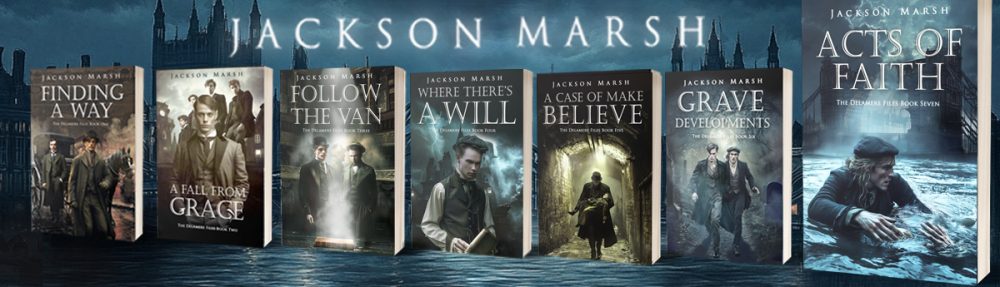
Do We Judge a Book by its Cover?
This week I am revealing the cover for my next novel, ‘Banyak & Fecks’ a Clearwater prequel. To help celebrate this, we asked a few fellow authors to answer some questions about how they arrive at their covers. I’m thrilled to post the replies from A.L. Lester, Samantha SoRelle and Vincent Virga along with their covers and links to where you can find their books.
My new Clearwater cover is posted at the end of this blog, but first, let’s take a look at how these three authors arrange their book covers, see those covers and find out a little more about author and book.
♥
 A.L. Lester, Taking Stock
Published 19th September 2020
[Historical, Gay romance, 1970s, Disabled MC, Hurt-comfort.]
It’s 1972, and Laurie is a farmer with a problem. He’s had a stroke, and he can’t work his farm alone any more. Phil is running away from London and the professional suspicion that surrounds him at his City job. They’re both alone and unsure what the future holds. Can they forge a new life together with their makeshift found family in Laurie’s little village?
Why did you choose this cover for your book?
Honestly? Because it was purple!
Do you design it yourself or pass over to a specialist designer? What’s your process?
I work with my publisher, JMS Books, to get the cover that I want. I fill in a cover form when I submit the manuscript, saying what I think would work; and that’s a starting point. I pick out some cover art and tell them what I’m visualising, and then we have a couple of rounds tweaking the look of it and changing things if necessary. I find it all quite stressful…decisions and all that. I don’t much like them!
Are you making a statement with the cover?
With Taking Stock it was really, REALLY hard to find appropriate cover models in the stock photography libraries. It’s set in the 1970s, and the models all tended to look like refugees from a book of knitting patterns. The sexiness levels were somewhere in the minus figures. I found a few pictures I liked that gave the right vibe for the book though, and I decided to use those rather than go for strictly accurate sideburns-and-flares type chaps. So my cover statement is more ‘Oh thank goodness, these people are in love and gazing at each other romantically’ than ‘Hey! It’s the 1970s! We all wore flares and had insanitary moustaches!’ if that makes sense?
Do you ask others for feedback or go with your gut feeling?
I rely on feedback from the cover artist. We have a good relationship, and if I say that it’s not working for me, the artist gives it another go. There’s mutual trust there, I think–they try and do their best for me, and I try not to take the mickey and be a primadonna about it.
Do you usually do a cover reveal event? If yes, is it only for selected viewing, e.g. through your newsletter?
I have in the past, but not recently, properly. I think in the future, it’s something I will make available through my newsletter or in my (tiny) Facebook group. I like people who are loyal followers to feel special.
 Who would be your ultimate person to provide a quote or appraisal for the cover of one of your future books?
Oooh, good question! Can I have a dead person? I’ve got a series of 1920s mystery books planned for the next year, and I REALLY love this picture by Joan Miro, called ‘Horse, Pipe & Red Flower’. I’d love the trilogy to have covers similar to this!
Website: https://allester.co.uk
Facebook: https://www.facebook.com/ALLesterAuthor/
UBL: https://books2read.com/takingstocklester
♥
 Samantha SoRelle, His Lordship’s Master
Published 20th November 2020. Series: His Lordship’s Mysteries
[Gay, Historical, Romance, Mystery, Scottish.]
Still reeling from the horrific events in London, Alfie thinks Balcarres House, the seat of his earldom, will be just the place to recover. But unexplained noises in the night, figures that vanish into thin air, and ghostly tales of the infamous Wicked Master all make for a less-than-restful stay. When one of the household turns up dead, matters only get worse.
While Alfie tries to solve this mystery, his lover Dominick struggles to fit into his new station in life. It feels like the mud from the slums still sticks to his fine new clothes. He starts to worry that he’ll never be able to stand by Alfie’s side, and about what will happen when Alfie realises the same.
But Balcarres House holds secrets that cry out for blood. If Alfie and Dominick aren’t careful, they may become the next ghosts trapped within its walls.
His Lordship’s Master is the second title in the His Lordship’s Mysteries series.
Why did you choose this cover for your book?
It’s a striking image that conveys the tone of my book, and the figure looks like shockingly similar to one of my main characters.
Do you design it yourself or pass over to a specialist designer? What’s your process?
I designed it myself using Canva at first, then Gimp once I became more familiar with the program. My process is pretty simple. First I scour the internet or my own photo archives for a picture that fits what I’m looking for, then AFTER CHECKING THE USAGE RIGHTS, I spend endless hours tweaking it, moving it one pixel to the left, shading it two degrees cooler, etc. I know I spend more time fussing with it than most would, but when you’re your own designer, you’re allowed to make endless revisions!
For the first book in the series, “His Lordship’s Secret”, I used a photo I took myself then played around with the coloring, then was fortunate enough to find the painting I use for “His Lordship’s Master” which already fit my color scheme of golden yellow and navy blue, however with the emphasis on the blue as opposed to “Secret” being predominantly yellow. So the two are distinct but still maintain that stylistic link.
Are you making a statement with the cover?
The only statement I’m trying to make is “Here’s a book you want to read! Come take a closer look.” I do try to keep similar elements within a series, so someone who has read book one will immediately know book two when they see it.
Do you ask others for feedback or go with your gut feeling?
I ask for feedback after I have a rough version marked up, or if I can’t decide between certain elements, but mostly I just go with my gut.
Do you usually do a cover reveal event? If yes, is it only for selected viewing, e.g. through your newsletter?
So far, all I’ve done is tease for a few days on social media before releasing the cover.
Website: www.samanthasorelle.com
Facebook: @samanthasorelleauthor (www.facebook.com/pg/samanthasorelleauthor)
Amazon Series Page: www.amazon.com/author/samanthasorelle
Amazon Link “His Lordship’s Master”: www.amazon.com/gp/product/B089FSQLLV
♥
 Vincent Virga, Gaywyck
Published 1980
[The first gay Gothic romance]
In the summer of ’75, pissed off by the fashion in the bestselling contemporary gothic romances of having the husband’s evil secret not a crazy wife in the attic but a hunky male lover in his bed, I decided to prove that genres have no gender. Essentially, it was about claiming territory. I was captivated by 19th-century writers like Charlotte Bronte, who used spooky happenings for spiritual shake-ups while prowling the labyrinthine corridors of self-discovery. My central character Robert Whyte’s psychological dilemma is not his being gay; it is his being human and prey to romantic delusions. To make this point, I rampaged through world literature and Hollywood movies abducting lines associated with female characters and putting them into the mouths of my male characters with no camouflage. (Like Bette Davis in “Now, Voyager,” Robert bursts into tears in Chapter 18 when being called “darling” for the first time.) I knew I had succeeded when Irish Murdoch sent me a note welcoming the new genre–the gay, gothic romance.
In one sentence, tell us why you choose this cover for your book?
The book was published by Avon; and their art department, having much experience with romance novels, had great, brilliant fun with it on their own.
Do you design it yourself or pass over to a specialist designer? What’s your process?
With my own Amazon reprint, I did my own simple cover: a single peony for the first volume of the trilogy.
 Are you making a statement with the cover?
Yes, peonies are my favorite flower and make an appearance in both published volumes of the Trilogy.
Do you ask others for feedback or go with your gut feeling?
With my own reprint, I knew what I wanted.
Do you usually do a cover reveal event? If yes, is it only for selected viewing e.g. through your newsletter?
There were no cover reveal events. They were first seen in reviews & in bookstore windows.
Who would be your ultimate person to provide a quote or appraisal for the cover of one of your future books?
I would have to talk this over with my editor. All of my nonfiction books have quotes from appropriate people.
My website is www.vincentvirga.com
♥
Back to Jackson
I’m waving at my screen and saying a huge thank you to those authors for taking the time to give their answers, which I hope you found as interesting as I did.
Three very different sets of answers to the same questions.
That shows us that everyone has their own approach, or their publisher does, and that book covers are very personal things. I’m thinking of A.L. Lester’s comment about purple, and Vincent Virga’s comment about peonies. And what’s interesting about Samantha SoRelle’s comments about the image fitting how she imagined one of her main characters, hits home with me.
Which leads me to my next cover. As usual, I discussed this with my professional designer, Andjela K, and, because this novel is about two of the Clearwater series’ main characters, I wanted them to be on it. I gave Andjela descriptions and some photo ideas, and she agreed to create portraits of the two boys circa 1884, giving the cover an old-world feel with the colouring.
So, once again, my thanks to Ally, Samantha and Vincent (whose books are now in my to-be-read collection), and will leave you with the front cover of ‘Banyak & Fecks’, due out at the end of this month.
Jackson Marsh, Banyak & Fecks
Publishing at the end of November
[Historical, Bromance, Male prostitution, Survival]


 Banyak & Fecks


 The Stoker Connection
 The Mentor of Lonemarsh House
 The Students of Barrenmoor Ridge


 Telegraph boys were also notorious for giving ‘extras’ for a small fee. These young men, some as young as thirteen, were employed to deliver telegrams, the equivalent of today’s texting, I guess. Smartly dressed in tight blue uniforms, fit from walking, and employed to knock at the doors of private homes, you can imagine how gay men, closeted by necessity, might find them tempting, and as the youths weren’t well paid, ‘tips’ were often welcome.


 I could go on, but I’ve already gone on long enough. My last tip would be, when thinking about writing historical fiction, do your research and make it fun. I have learnt so much over the past couple of years, I am now at the point of being able to insult people without them having a clue what I’ve said!


